for eliminating soil collapsibility is alkali treatment –
a chemical method of strengthening the foundation base.
What is alkali treatment of collapsible soils?
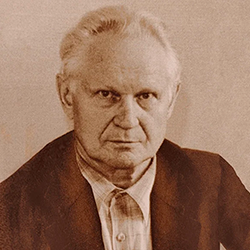
Eliminating soil collapsibility by alkali treatment is a proven technology that has been used in Russia for more than 40 years. The method was developed by Soviet scientists for VAZ facilities and has since been successfully used for industrial, civil, and transport projects on loess and clay bases.
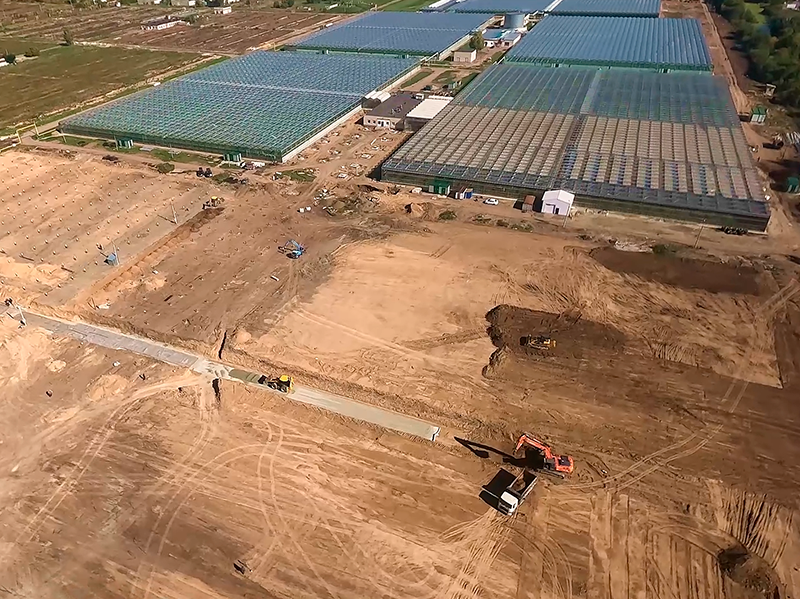
Unlike costly soil replacement or the use of extra-long piles, treating collapsible soils makes it possible to save 20-60 % of the foundation budget while maintaining high reliability. This is especially important for large projects - agricultural facilities, factories, greenhouse complexes - where foundation costs can reach tens of millions of rubles.


What soils is alkali treatment suitable for?
- cohesive (sandy loams, loams, and clays);
- clayey fill soils;
- collapsible loess;
- water-saturated.
- organic content >5 %;
- cohesionless (sandy and coarse-grained).
Alkali treatment and other methods of strengthening
collapsible soils
| Alkali treatment | Cementation | Silicatization | Resin grouting | |
| Cost, RUB/m3 | 16,500 | 20,200 | 25,400 | from 35,000 |
| Strengthened volume | 190 м3 | 940 м3 | 940 м3 | 940 м3 |
| Type | Sandy loam | Sandy loam | Sandy loam | Sandy loam |
| Time to strength gain, days | 21-30 | 28 | 14-21 | 7 |
| Equipment requirements | Standard pumping equipment | Special equipment | Special equipment | Special equipment |
| Key limitations | Organic content no more than 5 % |
Limited penetration into clay soils |
Kf not less than 0.2 m/day |
Kf not less than 0.5 m/day |
of different methods